
Pruning with the whole tree in mind
Before we cut, we assess. Deadwood, decay and the weight of the canopy tell us what a tree needs — sometimes that’s less work, not more.
- Free site assessment
- Fixed-price quote
- $20M public liability
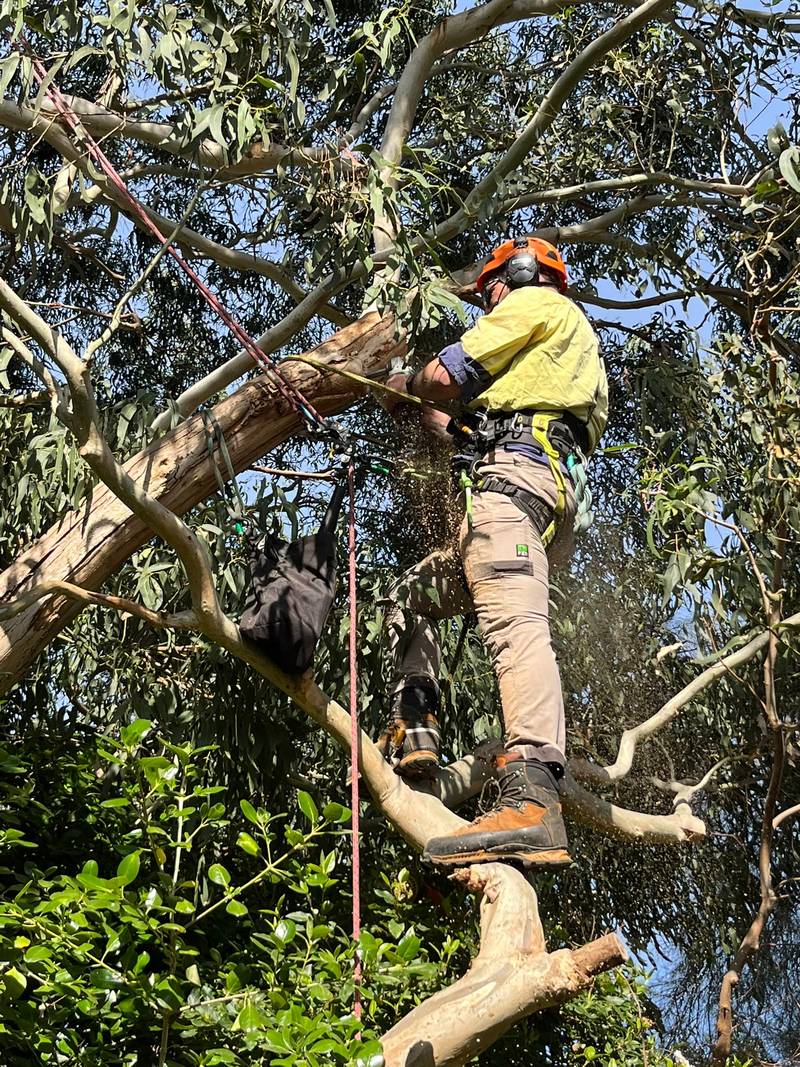
What pruning can do
Most pruning jobs are one of these, or a mix. We’ll explain what we’d cut and why before we start.
Deadwooding
Removing dead branches before they fall. Common in big eucalypts over houses, paths and driveways.
Crown reduction
Shortening long, heavy limbs back to a suitable branch, taking weight off without leaving ugly stubs.
Clearance
Cutting back from roofs, gutters, driveways, sheds and solar panels, and lifting low branches.
Formative pruning
Shaping young trees early so they grow a strong structure — the cheapest pruning a tree will ever get.
Habitat retention
Keeping safe dead limbs for wildlife where it makes sense — even carving nesting hollows into them.
Storm‑damage repair
Tidying torn and broken branches back to sound wood so the tree can recover.
Why we don’t “top” trees
Cutting a tree off at an even height — topping or lopping — looks tidy for a season. Then it sends up clusters of fast, weakly attached shoots from the cuts, which are more likely to break in the next storm, and the large wounds invite decay.
Good pruning cuts back to a branch or trunk that can take over, keeps the tree’s natural shape, and removes only what needs to go. If a tree has genuinely outgrown its spot, we’ll talk honestly about whether a reduction will work or removal is the better long-term answer.
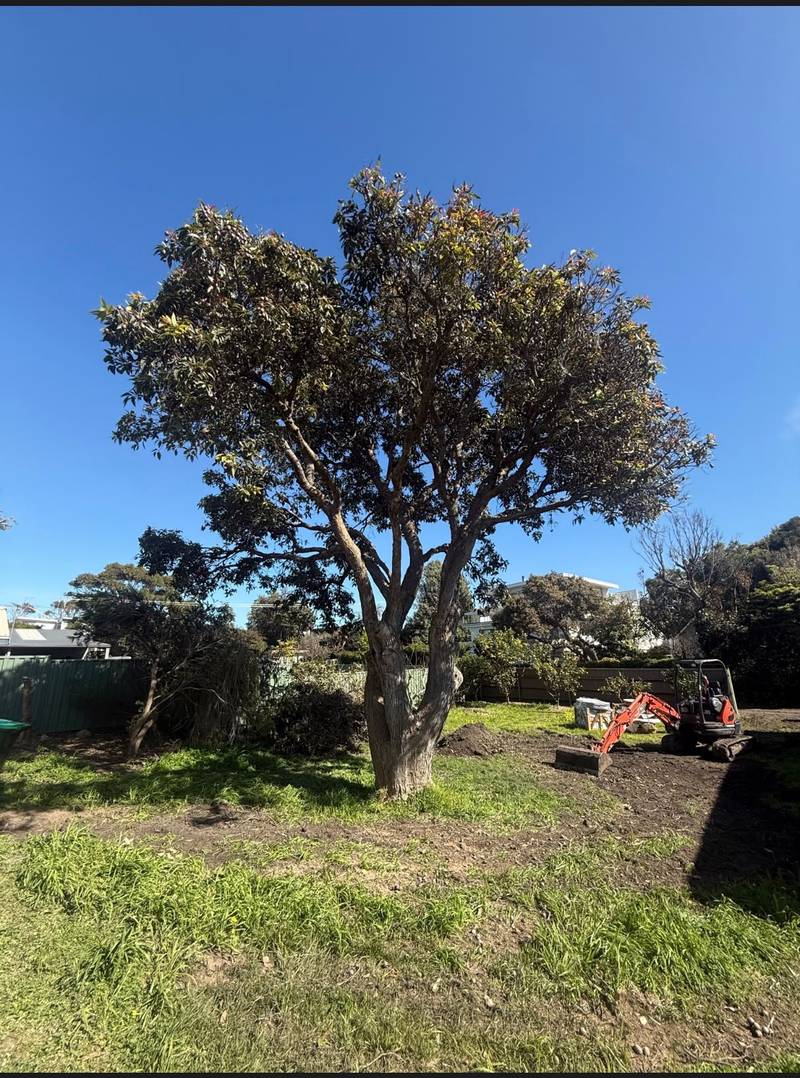
On this flowering gum (Eucalyptus ficifolia), two climbers took a light reduction off the over-extended limbs and removed the deadwood, leaving the tree’s shape intact.
A light reduction, not a haircut
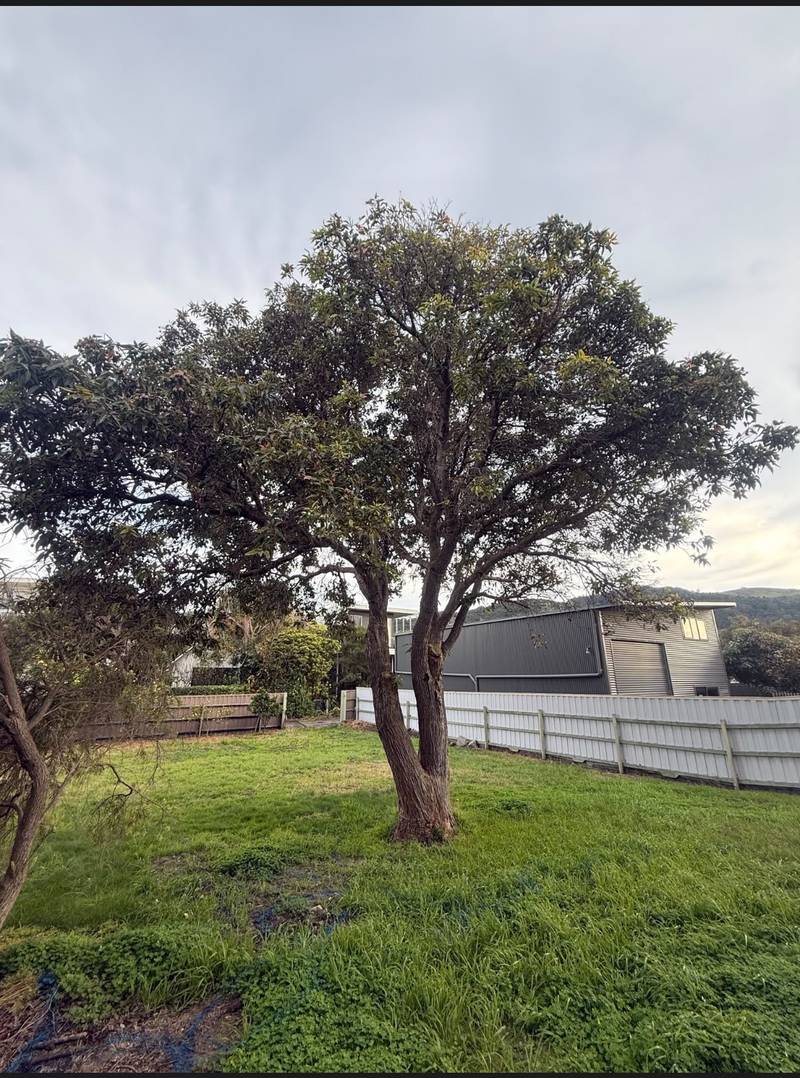
The before and after photos were taken from different spots on different days.
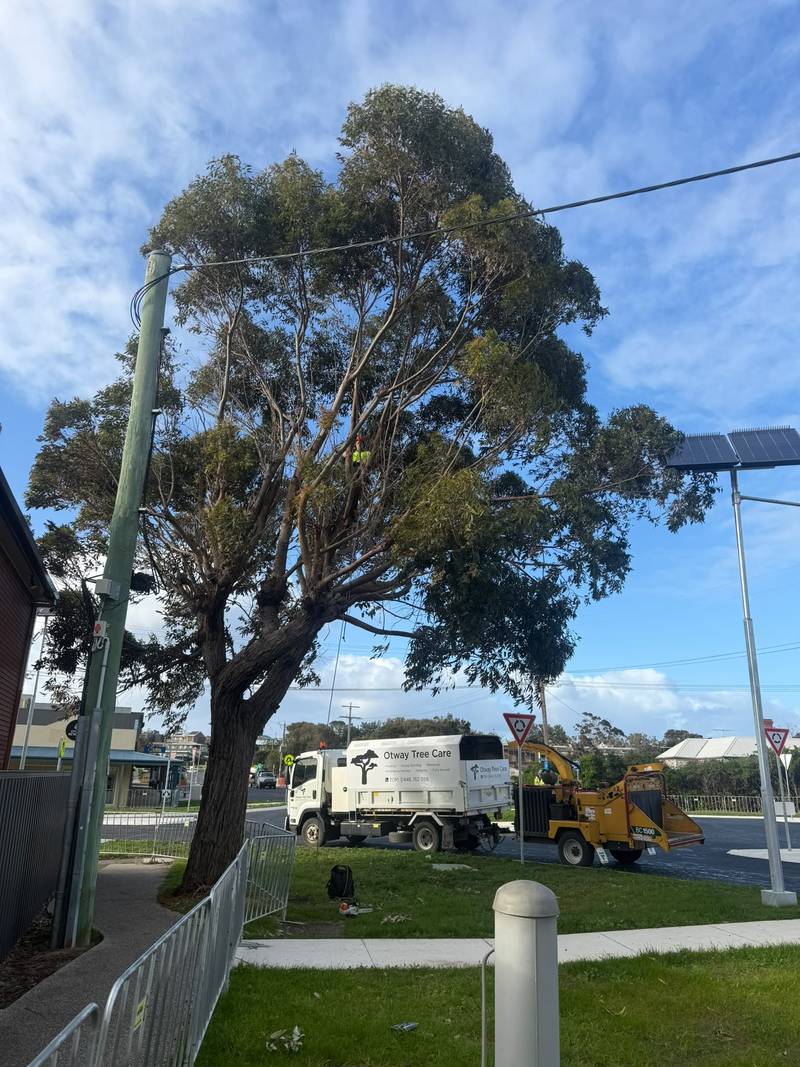
Clearing a eucalyptus off the solar lights at Apollo Bay’s new roundabout
A eucalyptus at the new roundabout on Pascoe and Moore Streets was shading the solar panels on the street lights. We pruned it clear.
When is the best time to prune?
Most trees can be pruned at any time of year, but some respond better at certain times — for example, to limit sap bleeding or to protect flowering. We’ll tell you what suits your tree, and dead or dangerous branches shouldn’t wait.
Can you just cut my tree shorter?
We can often reduce its height, but not by topping it. A reduction cuts limbs back to suitable branches so the tree stays in shape and is less likely to throw weak regrowth. Some trees can’t be reduced much without harm — we’ll tell you if yours is one.
Will pruning make my tree safe in a storm?
Removing deadwood and reducing heavy, over-extended limbs lowers the chance of branches failing. No tree can be made completely risk-free, but a well-pruned tree is a far better bet than a neglected one.
Do I need a council permit to remove or prune a tree?
Often, yes. Most native vegetation in the Otways is protected, many properties sit under extra overlays (landscape, vegetation or landslip), and since September 2025 some large trees on town blocks need a permit too. Whether your tree needs one depends on the tree and exactly where your property is.
Check with council before work is booked — Colac Otway Shire (03 5232 9400) for most of the region, or Surf Coast Shire (03 5261 0600) for Lorne. If we think a permit is likely when we look at the job, we’ll tell you. Our plain-English permit guide explains the main rules.
What happens to the wood and branches?
We agree it in the quote. Branches are usually chipped on site; you can keep the chips for garden mulch or have them taken away. Larger timber can be left in rounds for firewood, stacked, or removed. Leaving material on site usually costs less than carting it away.
How much will it cost?
It depends on the tree and the pruning needed: size, species and condition, how close it is to buildings or lines, how easy it is to get gear in, and what you want done with the wood, chips and stump. That’s why we look first. The site assessment is free and your quote is a fixed price for the agreed work — the price we quote is the price you pay.
Related services
Guides for this job
Jobs like this
Your local crew
Get a quote for tree pruning
Tell us what’s going on and where. We’ll call to talk it through, then come and look at the job — free — before giving you a fixed price.
- 0448 762 058Office Mon–Fri 7am–5pm · emergencies 24/7
- otwaytc@gmail.comWe aim to reply within 24 hours
- Based in Apollo BayServing Colac, the Otways and the Great Ocean Road
Tree down or dangerous right now? Don’t wait for a reply — call 0448 762 058. Stay at least 10 metres from fallen power lines and call Powercor on 13 24 12, or 000 if anyone is in danger.
Thanks, — your enquiry has been sent.
Here’s what happens next:
- We aim to reply within 24 hours, usually by phone on .
- We’ll arrange a time for a free site assessment in if the job needs one.
- You’ll get a fixed-price quote for the agreed work — no obligation.
Photos help us prepare. Text photos to 0448 762 058 or email them to otwaytc@gmail.com with your name.
Something urgent? Call 0448 762 058 — 24/7 for storm damage and dangerous trees.