The short version: you can cut back branches and roots that cross onto your property, at your own cost, once you’ve checked the tree isn’t protected. The cuttings still belong to your neighbour unless you agree otherwise. If the tree damages your property, start with your own insurer: a neighbour is usually liable only if they knew the tree was dangerous. Talk first; free mediation and then the Magistrates’ Court are the next steps.
Can I cut branches that hang over my fence?
Yes. In Victoria you can cut back branches, leaves or roots that cross your boundary, at your own cost. This is called the right of abatement. A few conditions come with it:
- Check the tree isn’t protected. The permit rules apply to the whole tree, including the part over your side. Our permit guide explains them.
- Cut only to the boundary, and only from your side, unless your neighbour agrees you can go onto their land.
- Don’t harm the tree. You’re responsible for any damage you do to it, so cuts need to be made properly.
- Renting? Ask your property manager first, or you could breach your rental agreement.
Who gets the branches I cut off?
Your neighbour. Unless you agree otherwise, the branches and leaves you cut remain their property and should be returned to them. The easy way is to agree beforehand: many neighbours are happy for the cuttings to be chipped and left as mulch, or taken away.
What about roots?
The same right applies to roots that cross your boundary. Be careful with big ones: cutting major roots can weaken a tree’s hold in the ground and make it more likely to fall. Get advice before cutting anything thicker than a few centimetres close to the trunk. If roots are damaging pipes, paths or foundations, see “The tree is damaging my property” below.
Who pays to prune or remove a neighbour’s tree?
A tree owner has no legal obligation to maintain their tree unless it’s causing damage or a nuisance. You can ask them to share the cost, and many will. To make a neighbour pay, you generally need to show the tree is damaging your property, or a court has to find it’s a private nuisance.
Leaves in the gutters, bark and fruit
Trees shed leaves, bark, sticks, flowers and fruit as part of normal life, and that usually isn’t a nuisance in law. It isn’t a reason to have a healthy tree cut back hard or removed. The practical options are talking to your neighbour, trimming what crosses your boundary, and keeping your gutters clear, especially before fire season.
The tree is damaging my property
If branches, foliage or roots from a neighbour’s tree have damaged your property, your neighbour may be liable. Check whether your insurance covers it first. Before you raise it with your neighbour or take it further, gather:
- photos of the damage and the tree
- quotes for the repairs and any pruning or removal
- a report from a consulting arborist showing the tree caused the damage. (We don’t write these reports; we can tell you if one is likely to be needed.)
Damage to a shared boundary fence falls under Victoria’s fencing rules, and the cost is usually split between neighbours.
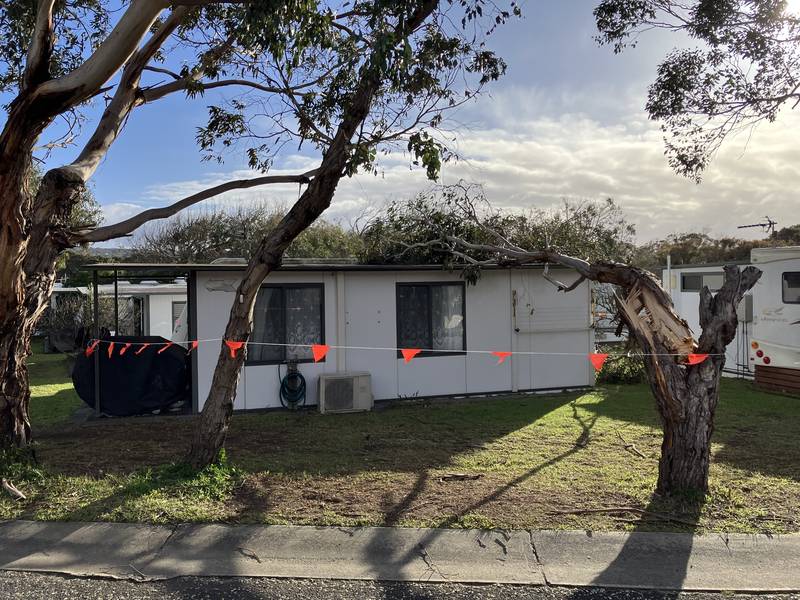
What if a neighbour’s tree falls on my house in a storm?
Safety first. If the tree is on the house or hanging dangerously, keep everyone clear and call us on 0448 762 058, answered 24/7, or the SES on 132 500 for storm help. If power lines are down, stay at least 10 metres away and call Powercor on 13 24 12, or 000 if anyone is in danger.
Then insurance. When a healthy tree comes down in a storm, it’s usually treated as no one’s fault, so you claim on your own home insurance for your property. The owner may be liable if they knew the tree was dangerous: for example, it was leaning or dying, or an arborist had recommended removing it. Some policies only pay to remove a tree if it damaged the insured home, so check yours. If it damaged a shared fence, each neighbour usually pays half, and each can claim on their own policy for their share.
Take photos before anything is moved. Our emergency page explains what we do on site.
The tree is on the nature strip or council land
Call council first. If the tree is protected, council may send its own arborist to assess it. If it isn’t, you may cut back the parts overhanging your boundary, the same as a neighbour’s tree. Colac Otway Shire is on 03 5232 9400; Surf Coast Shire (Lorne and Winchelsea) is on 03 5261 0600.
Worried a neighbour’s tree is dangerous?
Tell your neighbour what you’ve noticed, and put it in writing if it’s serious. A dead or split limb, a new lean or cracks in the soil around the base are worth raising early. Our guide to five signs a tree needs a closer look covers what to watch for. If they agree, we can look at the tree and tell you both what we see.
How do I sort out a disagreement?
- Talk first. It’s the quickest fix. If you don’t know your neighbour, leave a friendly note asking for a time to chat. Be clear about the problem, listen to their side, and bring any quotes you have.
- Free mediation. The Dispute Settlement Centre of Victoria offers free, confidential mediation, usually by phone or online. It assesses each case first and is currently prioritising rental disputes, so call 1300 372 888 to check. How mediation works.
- The Magistrates’ Court. A magistrate decides whether the tree is a private nuisance and who pays what. It can be slow and expensive, so get legal advice first; a community legal centre is a good place to start.
Where we fit in
We can prune back to the boundary from your side, or do the whole tree if its owner agrees, and we’ll check for permits first. We don’t give legal advice or write formal arborist reports for disputes or insurance claims. Those come from a lawyer and a consulting arborist.
Please note: this is a plain-English summary, not legal advice. Your insurance policy wording and the facts of each case matter. Sources: Victorian Government, Trees in Victoria and Dispute Settlement Centre of Victoria mediation; Financial Rights Legal Centre, tree damage in a storm.