The situation
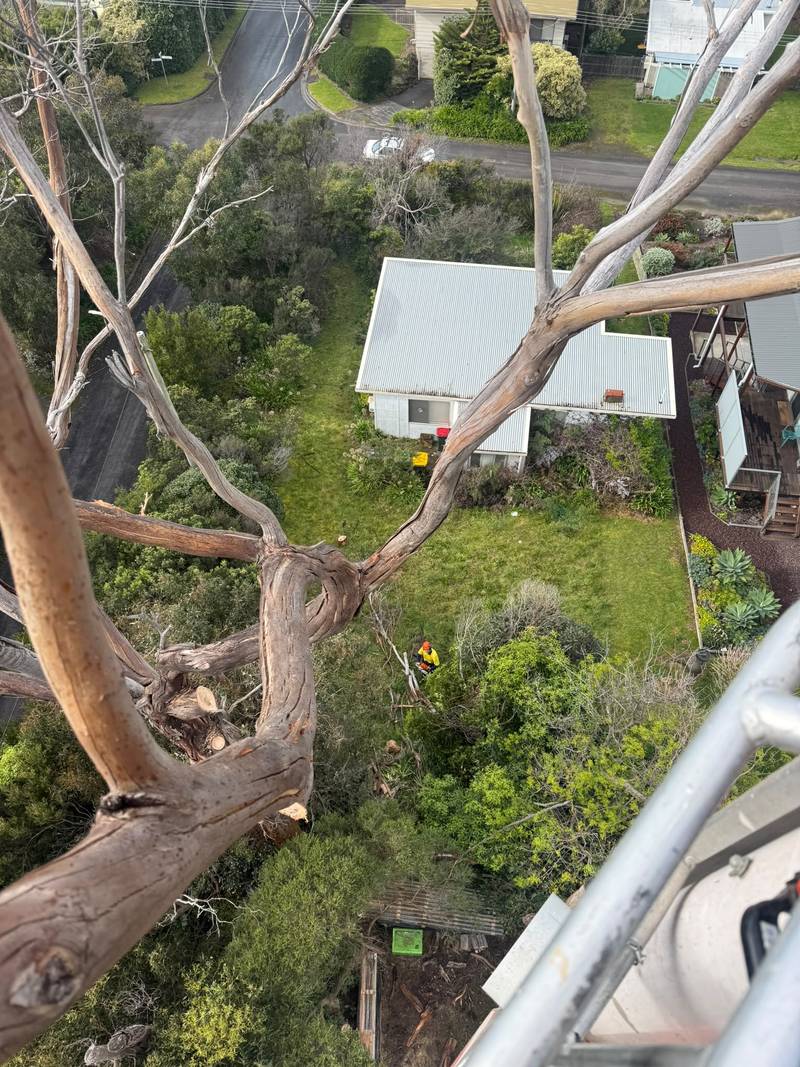
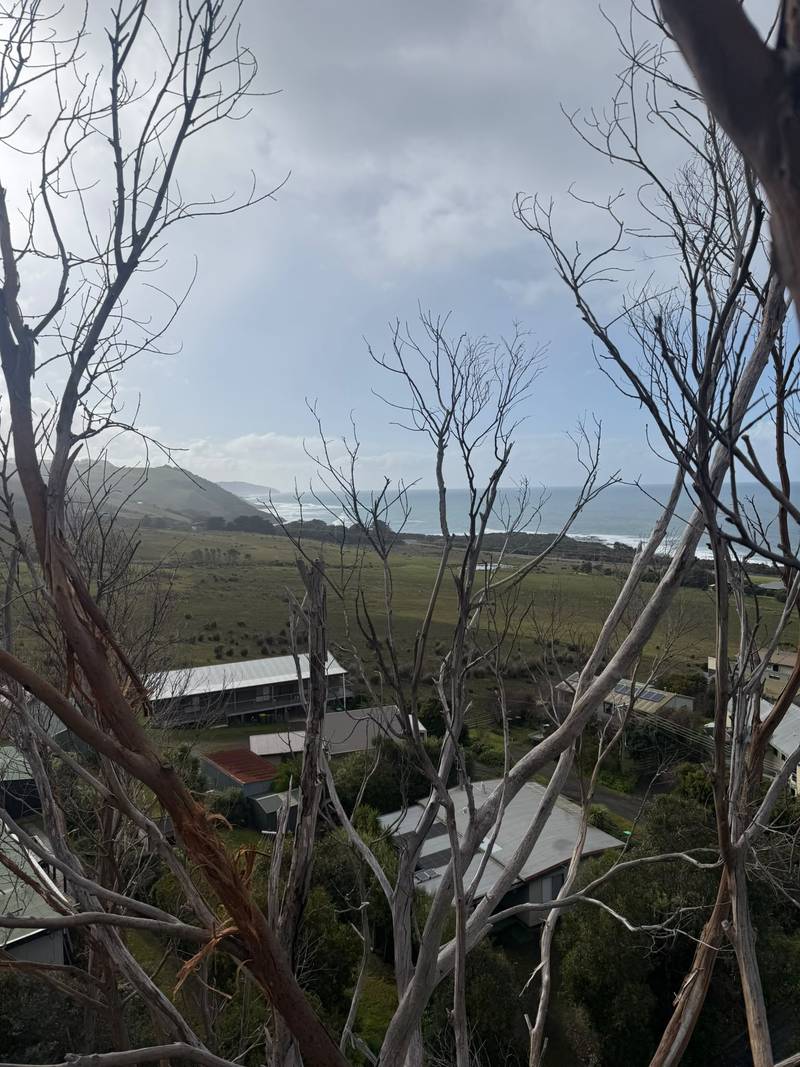
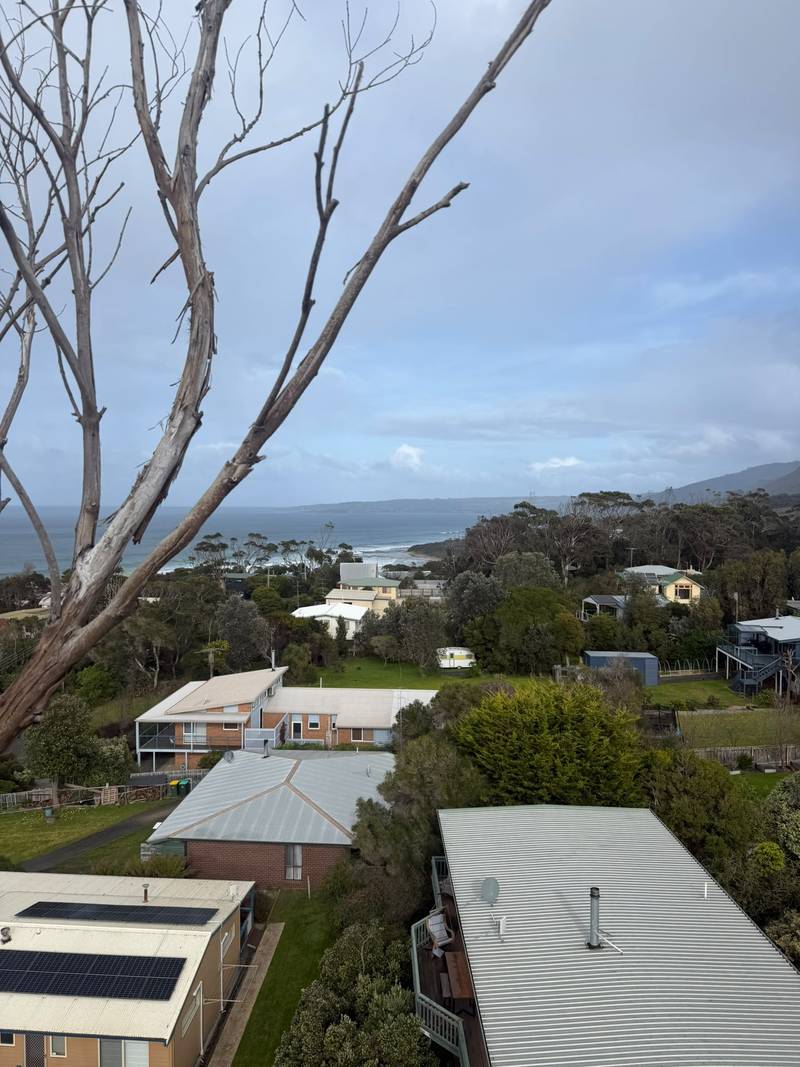
High on a hillside in Skenes Creek, with the ocean behind it, a massive dead eucalyptus leaned over houses, a driveway and the road below. It was bare, brittle and already shedding limbs. On an exposed stretch of the Great Ocean Road, where the wind comes straight off the water, it was only a matter of time before something came down.
Why we didn’t climb it
A lot of our removal work is done on ropes, with a climber working down the tree. But you can’t climb a tree you can’t trust. Dead eucalyptus timber won’t reliably hold a climber’s weight or anchor points — the branches you’d rely on are the ones most likely to fail.
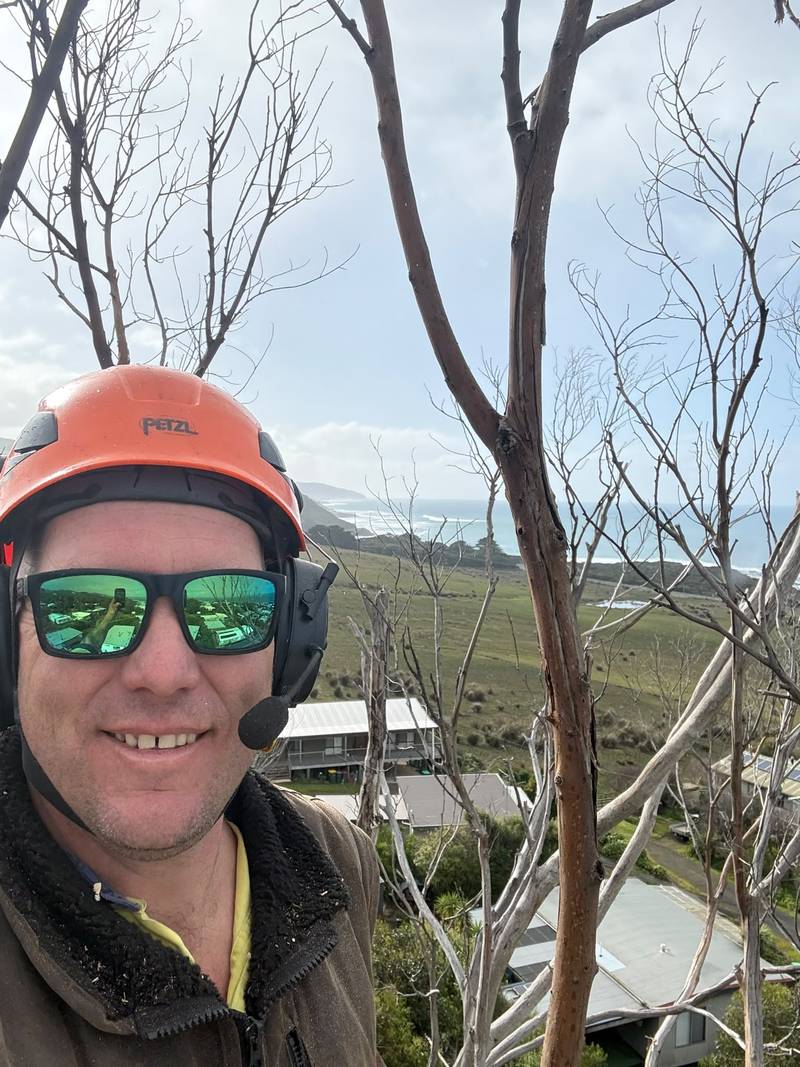
So we hired a spider lift: a compact, tracked elevated work platform that sets up on outriggers and lifts the arborist in a basket up into the canopy. All the weight stays on the machine, not on the dead tree.
The work
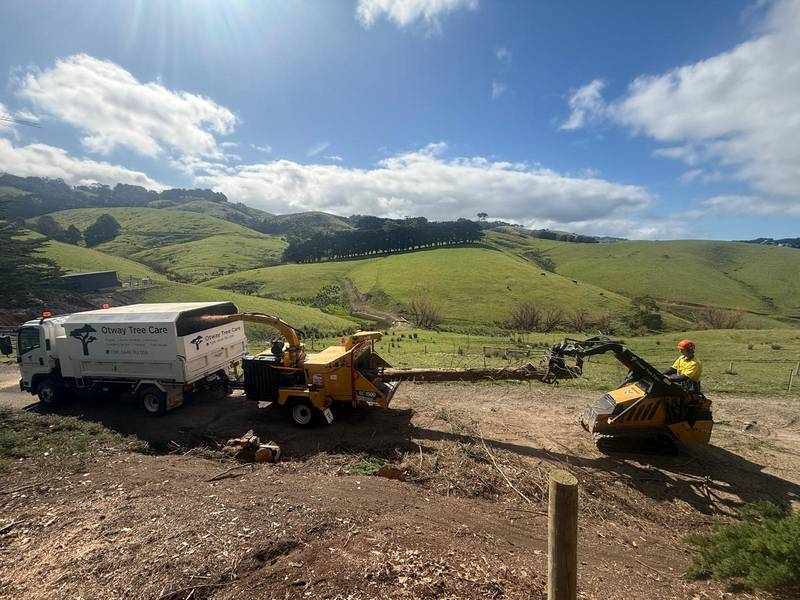
From the basket, we took the tree down from the top in sections, cutting each limb and lowering the bigger pieces under control so nothing simply dropped onto the houses, gardens or fences below. On the ground, the crew processed the timber as it came down and kept the site clear.
The result
The hazard is gone, the timber and debris were processed and removed, and the owners have their view back — without a dead tree hanging over the house.
A dead tree like this is far safer to deal with on a calm, planned day than after it has started to fail in a storm. If you have one over your house, book a free site assessment.